
What Are High-Altitude Stations (Haps) Explained
1. HAPS occupies a sweet spot between Earth and Space
Do not be confused about the binary of ground towers versus orbiting satellites. Platform stations that operate at high altitudes are in the stratosphere. They typically operate between 18 and 22 kilometers above sea level – an atmosphere that is at a level that is so steady and secure that a well-designed aircraft can hold its spot with remarkable accuracy. This is a high altitude for massive geographical footprints from a single machine, but close enough to Earth that signal latency stays low and the hardware doesn't have to endure the extreme radiation environment of space. It's an underexploited area of sky and the aerospace industry is only now getting serious about developing it.
2. The Stratosphere is Calmer Than You'd Think
One of most contradictory things about stratospheric travel is how stable the air is when compared to the turbulent atmosphere below. The winds at the stratospheric cruising levels are typically gentle and stable that are crucial to station keeping — the capacity of the HAPS vehicle to stay in station position on top of an area that is targeted. For earth observation or telecommunications missions, drifting just one or two kilometres from the position could affect the quality of coverage. Platforms designed for real station keeping, such as those designed by Sceye Inc, treat this as a foundational design requirement rather than an add-on.
3. HAPS stands for High-Altitude Platform Station
The acronym in itself is worth delving into. A high-altitude platform station can be identified under ITU (International Telecommunications Union) frameworks to be a base station on any object at an altitude of between 20 and 50 km at a defined, nominal station that is fixed in relation to Earth. This "station" component is intentional it's not research balloons that travel across continents. They're telecommunications and observation infrastructure, located at a station that carry out permanent missions. Think of them less as aircraft, more like low-altitude satellites, which are reusable, and have the capability in returning, being serviced and repositioned.
4. There are several types of vehicles Under the HAPS Umbrella
It's not the case that all HAPS vehicles appear the same. The category includes solar-powered fixed-wing aircraft, lighter-than-air airships, as well as tethered balloon systems. Every one of these has tradeoffs related to capacity of payloads, endurance, and cost. Airships as an example can transport heavier payloads for longer periods since buoyancy does most of the lifting work and frees up solar energy to power propulsion, stationkeeping, or onboard system. Sceye's strategy employs a lighter-than-air style airship specifically to increase the payload capacity and mission endurance — a deliberate architectural selection that separates it fixed-wing competitors chasing altitude records with a minimal weight.
5. Power Is the Central Engineering Challenge
To keep a structure in the stratosphere for months or weeks without refueling means figuring out an energy problem with the smallest margin of error. Solar cells harness energy during daylight hours, but this platform must withstand dark night with stored power. This is when battery energy density becomes a crucial factor. Innovations in lithium sulfur battery chemistry — with energy densities at or near 425 Wh/kg are making the stratospheric endurance of missions increasingly feasible. As well as increasing solar cell performance, the aim is to create a closed power loop producing and storing enough energy every day to continue full operation for a long time.
6. The Coverage Footprint is awe-inspiring In Relation to Ground Infrastructure
A single high-altitude platforms station at 20 km elevation can have a footprint that is several hundred kilometers in size. A standard mobile tower can cover less than a couple of kilometres. This makes HAPS particularly compelling for connecting remote areas or regions that are not served, where building infrastructure for terrestrial is economically unfeasible. A single spacecraft can perform what normally requires hundreds or dozens, if not thousands, of ground-based assets — making it one of the more reliable solutions for that persistent connectivity gap.
7. HAPS Can Carry Multiple Payload Types Simultaneously
Contrary to satellites, which typically are locked into a set mission profile after the time of launch, stratospheric platforms are able to have multiple payloads that can be changed between deployments. One vehicle could have an antenna for broadband transmission, along with sensors for greenhouse gas monitoring and wildfire detection. It could also be used for monitoring of oil pollution. This multi-mission versatility is one of the top economic arguments in favor of HAPS investment. The same infrastructure can serve connectivity and climate monitoring at the same time, instead of having separate assets to serve each job.
8. The technology allows Direct-to-Cell as well as 5G Backhaul Applications
From a telecoms perspective one of the things that the thing that makes HAPS particularly interesting is its compatibility with existing device ecosystems. Direct-to mobile solutions enable smartphones to connect without the need for special hardware, while it functions as HiBS (High-Altitude IMT Base Station) which is essentially a cell tower in the heavens. It can also act as 5G backhaul, connecting ground infrastructure to wider networks. Beamforming technology lets platforms to target signal precisely to the places where there is a need rather than broadcasting all over the place to increase the efficiency of the spectrum.
9. The Stratosphere is now attracting serious Investors
What was once a niche research domain 10 years ago has received significant funding from major telecoms companies. SoftBank's alliance with Sceye in the development of a national HAPS connection in Japan that will be focusing on pre-commercial services in 2026, represents one of the largest commercial commitments for stratospheric connectivity to date. It marks a change from HAPS being viewed as experimental to being treated as deployable an infrastructure that can generate revenue- a confirmation that will benefit the entire business.
10. Sceye Is a Conceptual Model for Non-Terrestrial Infrastructure
The company was founded by Mikkel Vestergaard with headquarters in New Mexico, Sceye has become a prominent future player in what's truly a frontier area in aerospace. Sceye's primary focus is on combining endurance, payload capabilities, and multi-mission capability reflects an underlying belief that the stratospheric platform are likely to become a constant layer of global infrastructure — not a novelty or a gap filler, but a genuine third layer that will sit between the terrestrial network and satellites on orbit. For connectivity, monitoring of climate, or emergency response, high-altitude platform stations are starting to look less like a futuristic idea and more like an essential element in how humanity observes and connects its planet. Read the best sceye lithium-sulfur batteries 425 wh/kg for website recommendations including what are haps, stratospheric internet rollout begins offering coverage to remote regions, softbank investment sceye, Mikkel Vestergaard, Stratospheric earth observation, softbank group satellite communication investments, stratospheric internet rollout begins offering coverage to remote regions, Stratospheric infrastructure, High altitude platform station, Sceye endurance and more.
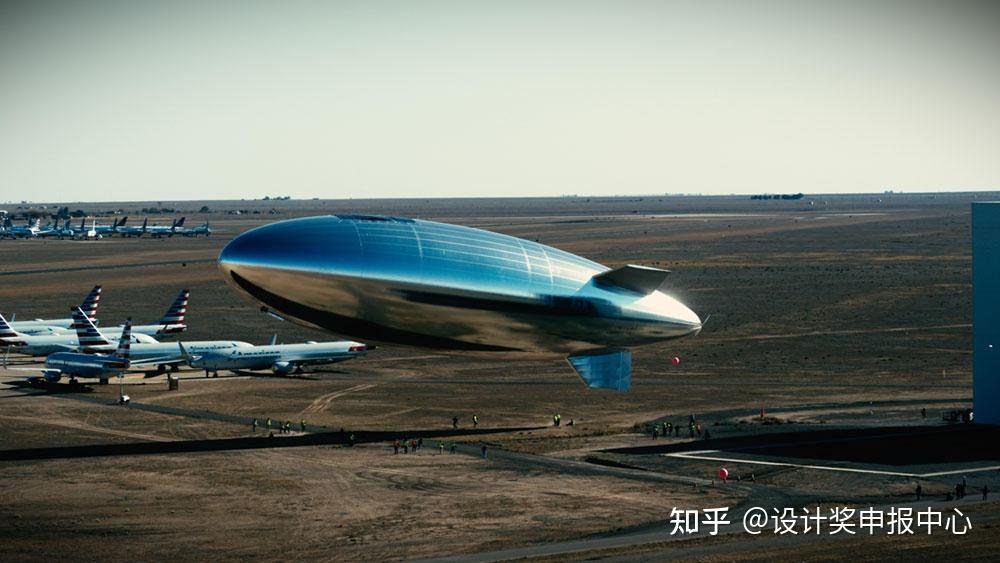
Sceye's Solar-Powered Airships Are Bringing 5g Service To Remote Regions
1. The Connectivity Gap Is a Infrastructure Economics problem first.
The estimated 2.6 billion people are still without Internet access that is reliable, and the reason is almost never because of a lack in technology. It's an absence of economic rationale for the deployment of that technology in areas where population density is too low or the terrain is not suitable or stability in the political landscape can't be assured to ensure an appropriate return on infrastructure investment. Building mobile towers over mountainous archipelagos in deserted interior regions or island chains is expensive when compared with forecasts of revenue that don't support the idea. This is the reason why the gap in connectivity continues to exist regardless of years of effort and genuine goodwill. The problem isn't in the awareness or intentions however, it's the unit cost of terrestrial expansion in areas that go against the conventional infrastructure blueprint.
2. Solar-powered aircrafts redefine the deployment Economics
A stratospheric aircraft that operates as an antenna for cell phones in the sky changes the price structure for remote connections in a way that is significant on a practical level. One platform at 20 km altitude has a land area that requires dozens of terrestrial towers to replicate, and without the engineering or land acquisition, the power infrastructure, and continuous maintenance required by ground-based deployments. The solar-powered platform removes the fuel logistics completely — the platform generates its own electricity from sunlight, accumulates it into high-density lithium batteries for use over the night, and continues its mission without transport chains reaching into remote areas. In areas where the main barrier to connectivity is primarily the price and complexity of physical infrastructure the solar-powered solution is a totally unique proposition.
3. The 5G Compatibility issue is More Important Than It Sounds
Delivering broadband from the stratosphere is only beneficial commercially for a device users actually own. Satellite internet was initially a requirement for advanced terminals that were expensive big, heavy, and ineffective for widespread use. The evolution of HIBS technology that is High-Altitude Intermediation Base Station standards — revolutionizes the way we use stratospheric platforms compatible with the existing 5G and 4G standards used by standard smartphones. A Sceye airship operating as a stratospheric telecom antenna can in principle serve ordinary mobile devices without any additional hardware required on users' end. The compatibility with existing operating systems is the key difference between a connectivity solution which reaches everyone who is in the region of coverage, and one that only reaches those who can be able to pay for special equipment.
4. Beamforming Transforms a Large Footprint into a Reliable Targeted Coverage
The coverage area of a stratospheric platform is large However, the extent of coverage and useful capacity are not the same thing. Broadcasting uniformly over a region of 300 kilometres consumes the majority of available spectrum in uninhabited terrains, open water, and in areas where there are no active users. Beamforming technology allows an antenna that is stratospheric to concentrate energy from the signal those areas that have the greatest demandlike a community of fishermen on an area of the coastline or an agricultural region in another, and a town suffering from a catastrophe in a third. This smart signal management greatly improves the efficiency of spectral energy, which results in the capacity available to actual users rather than the theoretical maximum coverage area it could light when it broadcasts in a symbiosis manner.
5G backhaul services benefit of the same methodologysending high-capacity link connections precisely to infrastructure nodes on the ground that need them rather than spraying capacity across an empty area.
5. Sceye's Airship design maximizes the payload It is available for Telecoms Hardware
The telecoms payload of a stratospheric platform — antenna arrays as well as signal processing devices, beamforming equipment power management systemsactually weighs a lot and has a significant volume. Vehicles that use the majority of its structural and energy budget simply surviving in air, does not have enough room for important telecoms equipment. Sceye's lighter-than air design tackles this directly. Buoyancy carries the vehicle without constant energy consumption for lifting. That means the available the power and structure capacity to enable a telecoms payload big enough to deliver commercially useful capacity rather than a weak signal spread across an immense area. The airship architecture isn't incidental to the purpose of connectivitythat's the reason why carrying a high-quality telecoms equipment along with other mission equipment viable.
6. The Diurnal Cycle decides if the Service is Continuous or Intermittent.
Connectivity that works at all times of daylight and turns dark at night isn't truly a service for connectivity — it's just a demonstration. In order for Sceye's solar-powered aircrafts to provide the type of continuous connectivity that remote communities and emergency response personnel commercial operators rely on, the platform must overcome the problem of energy during the night quickly and repeatedly. The diurnal period — that is, generating enough solar energy in daylight to power all devices and to charge batteries sufficiently to be fully operational until next dawn — is the main engineering limitation. Technology advancements in lithium-sulfur batteries energy density, which is now approaching 425 Wh/kg and improving the efficiency of solar cells at the stratospheric level will close the loop. Without these endurance and continuity, the concept of endurance remains conceptual rather than operational.
7. Remote Connectivity Is Compounding Social and Economic Effects
The reasoning behind connecting remote regions doesn't have to be purely humanitarian in the broad sense. Connectivity enables telemedicine that reduces the cost of providing healthcare for areas with no nearby hospitals. It facilitates distance education, which does not require the establishment of schools in every scattered community. It provides financial services access that replaces cash-dependent economies with the efficacy in digital payments. It also allows early warning systems for catastrophes that strike the populations that are most vulnerable. Each of these effects will intensify with time as communities develop digital literacy and local economies adjust to reliable connectivity. The stratospheric internet rollout starting in remote areas isn't providing a luxury — it's delivering infrastructure that has downstream effects on health, education, safety as well as economic participation.
8. Japan's HAPS Network demonstrates how National-Scale The Deployment Plan Looks Like
It is believed that the SoftBank collaboration with Sceye is aimed at launching the commercialization of HAPS options in Japan in 2026 is significant due to its magnitude. A network that spans across the nation requires many platforms that provide overlapping and continuous coverage throughout a nation whose geography — thousands of islands interior, long coastlines -which creates precisely the kind of coverage problems that stratospheric connectivity has been designed to tackle. Japan is also a highly developed regulatory and technical environment where the operational challenges of managing stratospheric platforms on a national dimension will be dealt with as well as resolved in a way that generates lessons applicable to any subsequent deployment elsewhere. What's working in Japan can be used to determine what works over Indonesia and in the Philippines, Canada, and every other country with similar areas of coverage and geography.
9. The Perspective of the Founders Shapes How the Connectivity Mission Is Reframed
Mikkel Vestergaard's founding philosophy at Sceye treats connectivity not as commercial service that can be used to reach remote areas but as an infrastructure that has a social obligation to it. This framework determines which deployment scenarios the company chooses to focus on as well as the types of partnerships it is seeking, and how it articulates what its platforms are for before regulators, investors and potential operators. The focus on remote regions or communities in need of services, and connections that are resilient to disasters reflect a perception that the layer created should benefit those less served by the infrastructure, not as an optional benefit but as a primary necessity of the design. Sustainable aerospace innovations, in Sceye's context, means creating solutions to real gaps instead of improving service for the populations already adequately covered.
10. The Stratospheric Connectivity Layer is Starting to Look Like a Natural Event
For a long time, HAPS connectivity existed primarily in terms of a conceptual idea that attracted investment and generated demonstration flights but never produced commercial services. The combination of advancing battery chemistry and improving performance of the solar cells HIBS standardisation enabling device compatible devices, and commitment to commercial partnerships has shifted the direction. Sceye's solar-powered Airships reflect a convergence of these enabling technologies in a time when the demand side — remote connectivity and disaster resilience, as well as 5G's growth has never been more clearly defined. The stratospheric layer between satellites orbiting earth and terrestrial networks does not appear to be filling in across the borders. It is being designed with a specific specifications for coverage, a specific set of technical specifications, and specific commercial timelines associated with it. See the top softbank haps for website examples including space- high altitude balloon stratospheric balloon haps, softbank investment sceye, Station keeping, telecom antena, sceye careers, HAPS investment news, Sceye Founder, Sceye stratosphere, what are high-altitude platform stations haps definition, HIBS technology and more.
